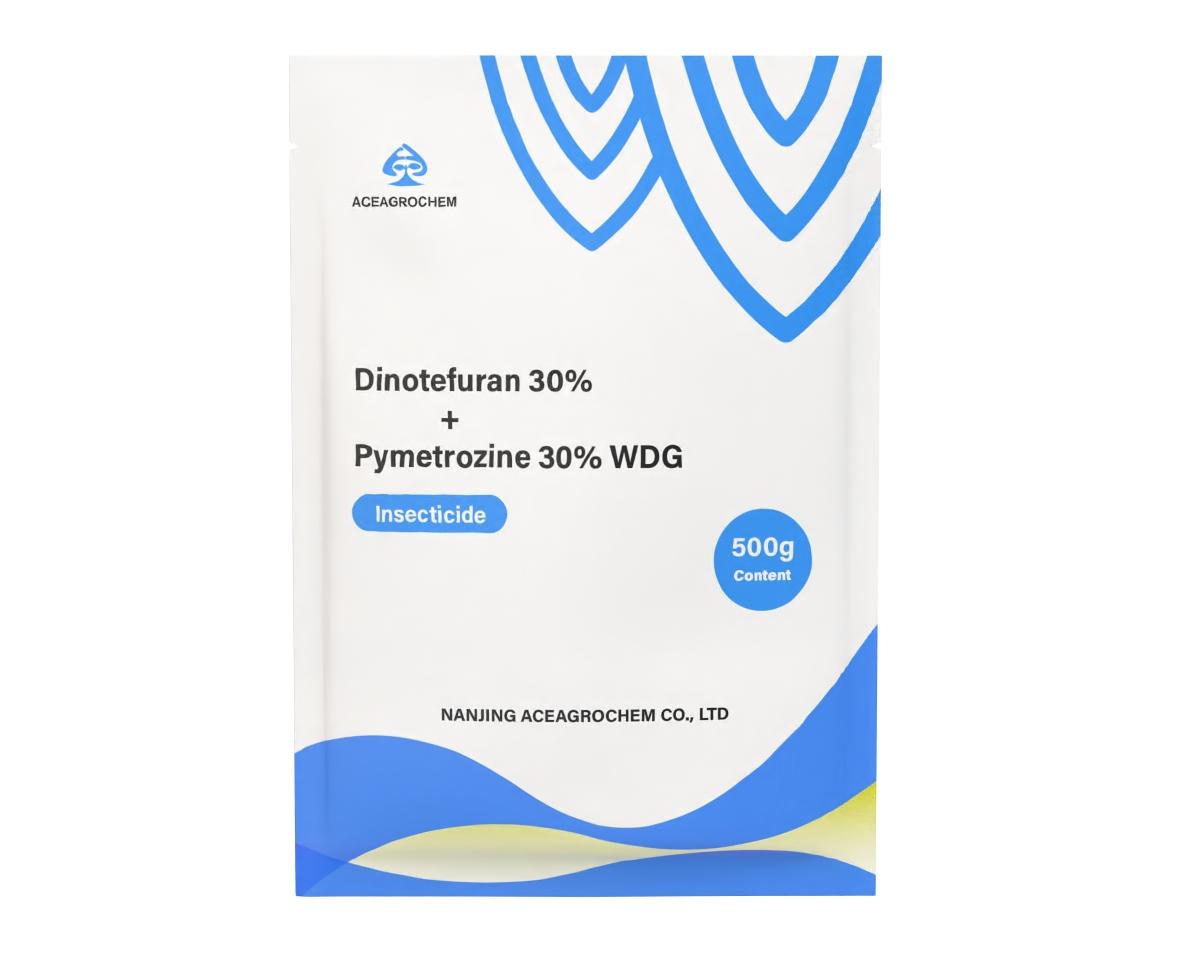
Dinotefuran 30% + Pymetrozine 30% WDG
Classification:
Insecticide
Formulation:
Dinotefuran 30% + Pymetrozine 30% WDG (Water Dispersible Granules)
CAS NO:
Dinotefuran: 165252-70-0;
Pymetrozine: 123312-89-0
USAGE:
A broad-spectrum insecticide for controlling sucking pests such as aphids,
whiteflies, planthoppers in various crops including rice, vegetables, fruits,
etc. It has excellent systemic and contact activity to provide long-lasting
protection.
Pack size:
100g, 250g, 500g, 1kg/bag, or as required
Direction for Use
| Crop | Target Pests | Dosage (30% + 30% WDG) | Application Timing | Remarks |
|---|---|---|---|---|
| Rice | Planthoppers | 150-200 g/ha | At the early stage of pest infestation | 1) Thoroughly mix with water before spraying. 2) Spray evenly on the foliage. |
| Vegetables | Aphids | 100-150 g/ha | When aphids are first detected | 1) Avoid spraying during high-temperature periods. 2) Repeat application may be required depending on pest pressure. |
| Fruits | Whiteflies | 150-250 g/ha | Before the peak of whitefly population | 1) Use sufficient water volume for spraying. 2) PHI: 7-10 days depending on the fruit type. |
Product Details
Mode of Action:
-Dinotefuran acts on the insect nervous system by binding to nicotinic
acetylcholine receptors, causing paralysis and death of insects.
-Pymetrozine disrupts the feeding behavior of sucking insects, leading to
starvation and death.
-The combination provides both quick-knock-down and long-lasting control
effects.
Benefits:
-High efficacy against a wide range of sucking pests.
-Low toxicity to non-target organisms such as bees when used as directed.
-Good rainfastness after spraying.
-Compatible with many other Pesticide for tank-mixing.
Precautions:
-PPE: Wear long-sleeved shirts, long pants, chemical-resistant gloves, and
goggles.
-Do not apply near aquaculture areas.
-Do not allow livestock to graze in the treated areas immediately after
application.
-Storage: Keep in a cool, dry, and well-ventilated place, away from food, seeds,
and feed.
Environmental Hazards:
-May be toxic to aquatic invertebrates.
-Avoid direct contamination of water bodies.
-Low toxicity to birds, but still need to prevent direct ingestion.
-Biodegradable in soil with a reasonable half-life under normal environmental
conditions.